Your monthly insider access to the top health professionals on the cutting edge of their fields.
Welcome to Doctor Direct.
It’s your personal resource
for wellness.
There’s no runaround…no paperwork…no prescriptions…no co-pays…
Just the information you need
to take control of your health.
Are you worried about your health? Ask our doctors about your problem. Send your question to: [email protected].
The answer may appear in next month’s Doctor Direct.
*We value your privacy. Names are changed on all published questions.

Can Gravity Help My Back Pain?
Q: I’ve had lower back problems over the years. I’ve heard that inversion tables can help. What should I look for in one and what’s the best way to use it?
A: Hi James,
I’m a big fan of inversion tables. Being upside down allows you to use gravity to decompress your disks and nerve roots. Just a few minutes of inversion a day can relieve common lower back pain.
But, there are a few precautions you need to take…
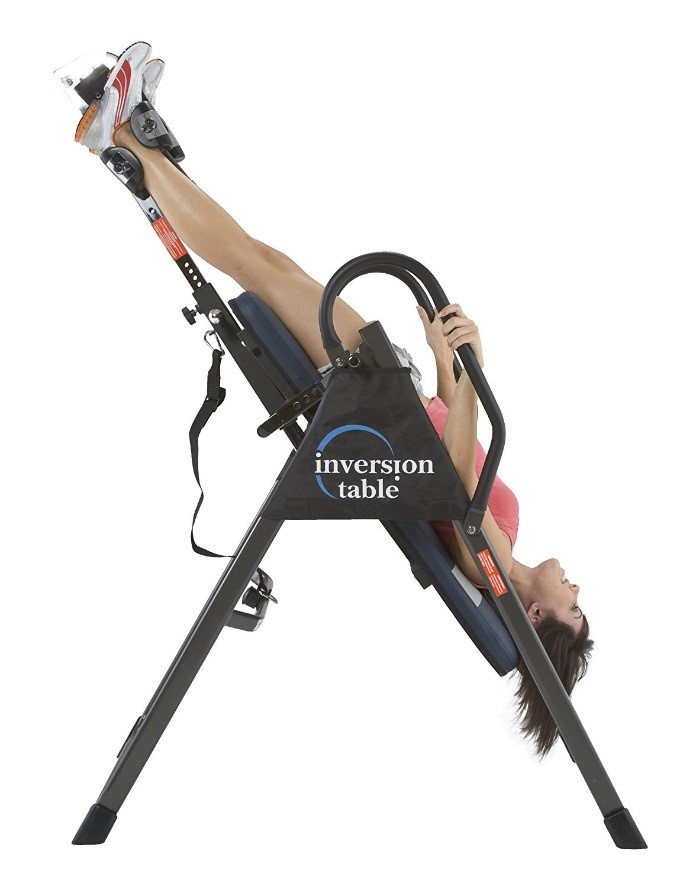 First, inversion tables aren’t for everybody. When you are inverted for more than a few minutes, your heartbeat slows. Your blood and eyeball pressure increase. This makes the head-down position risky for individuals with high blood pressure, heart disease, or glaucoma.
Another thing to consider is that these tables are primarily for lower back pain. So if you have neck or upper back pain, they aren’t going to help much.
Some studies have shown that inversion tables are not effective for long-term relief. I don’t buy that. I believe that since inversion therapy is safe when done correctly, you can use it as a long-term solution.
And here’s something else to consider… Most people get the greatest benefit from inversion therapy when they include it as part of a more comprehensive treatment program. So adding a few minutes of upside-down time each day to a plan that also includes chiropractic care and physical therapy (preferably by a therapist trained in the McKenzie Protocol for back pain) will likely lead to the best results.
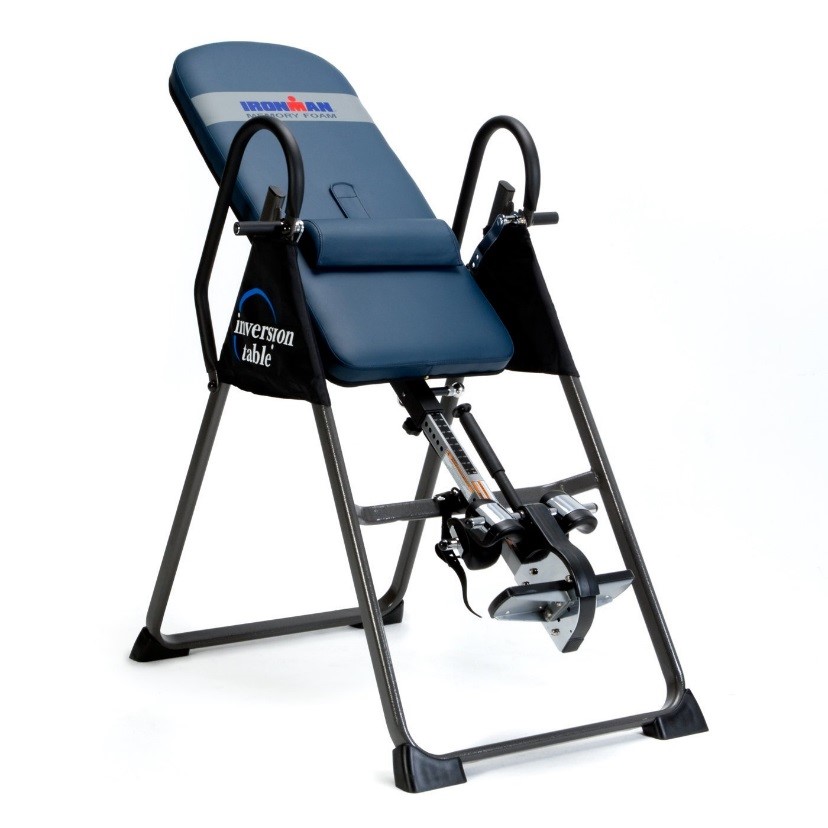 As far as what to look for in a table, quality should be your number one concern. You don’t want to buy a cheap inversion table. They are often made of low-quality plastics. It can create the sort of hazard you never want to face when you’re hanging upside-down.
Instead, I suggest you find a high-quality steel-frame model. They are sturdier and last longer. Some of the higher-end models have motorized components that allow you to easily adjust the angle of inversion. Though it’s a nice frill to have, it isn’t essential.
I’m not affiliated with this brand in any way, but I’m partial to the Ironman Gravity 4,000 Inversion Table.
There are several things I like about this model. It has a wide steel frame that supports up to 350 pounds and a memory foam backrest for extra comfort. I also like that it has extra-long foam handles. These offer you more control as you change angles and can prevent accidents. You can find more information on this table here.
 Before you buy, a word of caution… Many patients find full inversion too painful on their ankles or knees. When you combine this with the feelings of instability most people experience when upside-down, it’s easy to understand why many prefer to have someone supervise them while they do this.
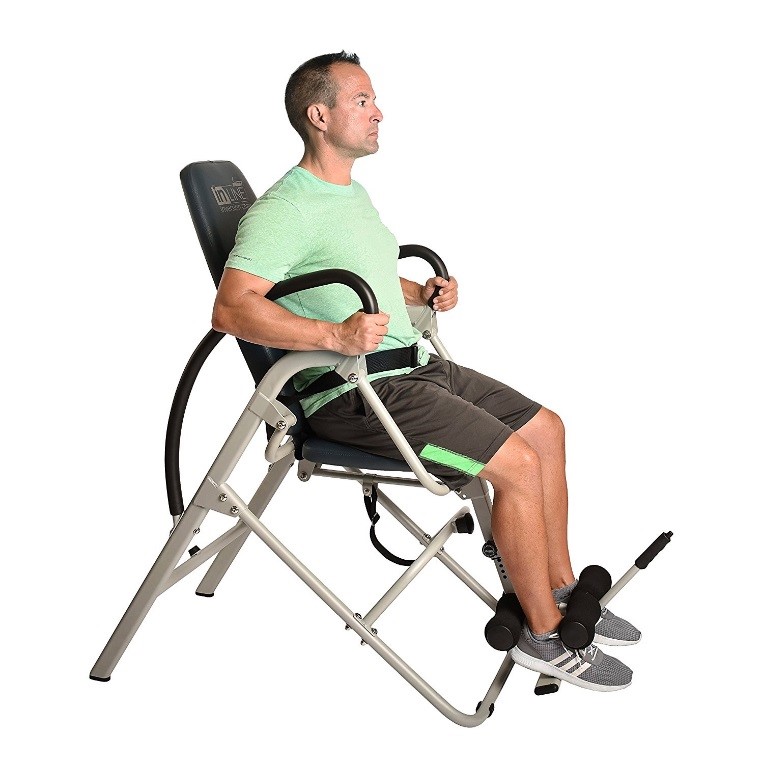
If you live alone, have bad ankles or knees, or simply prefer a less intense experience… You might want to consider an inversion chair instead.
Much like an inversion table, the inversion chair uses gravity as a negative force for decompression. Because you have handles and a seatbelt-like mechanism to hold you in place, it eliminates the opportunity for pain in the ankles or knees.
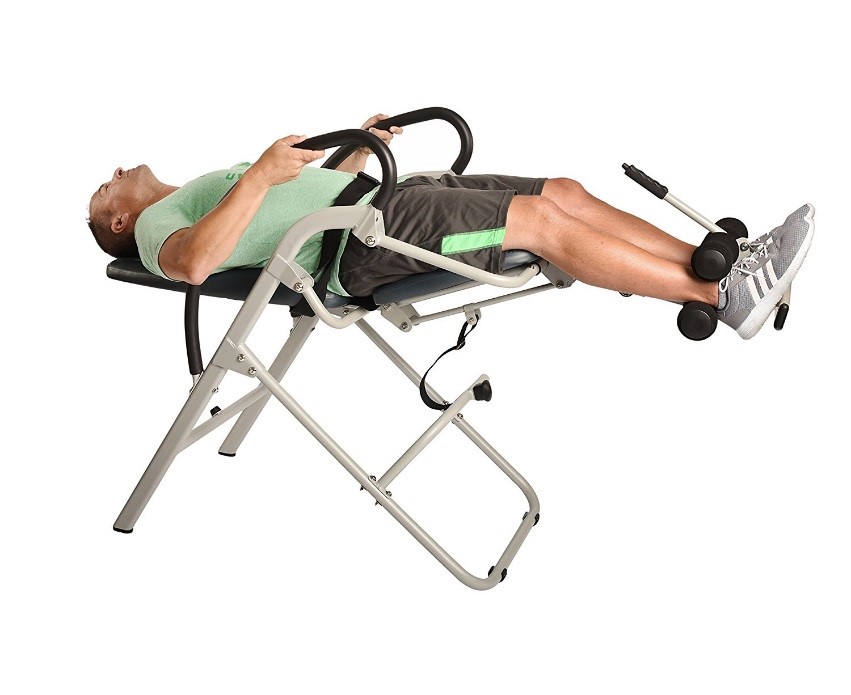 The tradeoff is that you cannot completely invert… So the amount of decompression is limited. However, for many people, an inversion chair is more manageable than a table while still significantly alleviating back pain.
Whether you get an inversion table or chair, I suggest starting slow. Don’t invert more than 10 or 15 degrees at first. Limit your sessions to about 10 minutes. It’s better to do it for a few minutes every day than to have one or two extra-long sessions a week.
Inverting can be uncomfortable at first. But for many, the relief is worth a few awkward moments.
Best,
Dr. Wayne J. Broth
What Are the Best Natural Solutions For Good Sleep?
Q: My wife suffers from fibromyalgia and it is wreaking havoc on her sleep. Are there any natural solutions that can help her?
A: Hi Greg,
Fibromyalgia (FM) is a very difficult condition for both patient and physician. Pain often interrupts your sleep. And restful sleep is something that you need when you have FM.
Sleep helps every part of your brain and body. You can’t have normal circulation or cognition if you are never sleeping more than an hour or two at a time.
There are many different ways to help improve your sleep. I always start with the bedroom itself.
Is your bed comfortable? If you are over 50, you likely need some form of cushion top to your mattress. This helps compensate for any loss of subcutaneous tissue.
Your bedroom should be dark, cool, and free of electronics. Beds are reserved for sleep and intimacy. No screens—cellphone, TV, or computer—in the last one or two hours before bed.
A worried or restless mind will keep you awake. Try to find a way to defer worries to tomorrow. Calm your mind if it starts spinning. Any of these issues can interfere with restful sleep.
To your question, there certainly are natural solutions that can help your wife.
Glycine is an amino acid that supports deep sleep. You can take it as a supplement. Or you can get it by drinking homemade bone broth. Here's a recipe.
You may be genetically or physiologically (if you’re over 40) unable to make enough of the sleep hormone melatonin. This means you’ll require some help. My patients supplement with 1-15 mg, depending on age and tolerance. This may help sustain your sleep.
Bio-identical hormone replacement for menopausal women can also be a huge aid to sleep.
Gamma amino butyric acid (GABA) can be very calming, too. So can its precursor, L-theanine. Its more bio-available form, pharmaGABA, also has a calming effect. These are all available in supplement form.
Another thing to keep an eye on is your vitamin D levels. A deficiency can contribute to poor sleep. So have blood work done to determine your 25 (OH) D levels. Try to stay in the range of 40-65 ng/mL for optimal health.
Sleep apnea is another consideration. Any report of unrefreshing sleep merits an evaluation for this condition. Most sleep clinics can now evaluate you for sleep apnea in the sanctuary of your own bedroom. All the supplements and relaxation in the world won't help if your airway closes at night…and your body tries to wake you up just to breathe.
Finally, I would want to consider the other systems that might be affected… Either on their own or as part of your wife’s FM. Like adrenal dysregulation. This often causes early waking. You can identify it with a 24-hour saliva test.
Thyroid function may also be a problem. This requires a panel of blood tests for careful evaluation. I check levels of both T3 and T4 hormones. I also look at TSH, antibodies to the thyroid gland, and the level of “reverse T3.” This is an inactive form of the hormone often elevated in conditions of adrenal problems or other stressors.
And of course, how you treat your body can help you sleep.
Exercise—either vigorous or gentle—in the late afternoon can help bring sleep at night.
A warm bath with Epsom salts is helpful to many people. A relaxing practice, such as yoga or tai chi, is also a possible aid. Not to mention the wonderful relief from a great massage. Try a weekly massage for a month to see if it has a cumulative benefit.
Get yourself a sleep journal. Make notes about your interventions. Give each one a good week at least.
Make careful decisions as you try just one intervention at a time… There’s nothing worse than trying something helpful and something disruptive at the same time.
I’m confident your wife will find a solution and be rewarded with restful sleep!
To Your Health,
Dr. Deborah Gordon
How Can I Prevent Migraines?
Q: I’ve suffered from frequent migraines for most of my life. What’s the best way to prevent them?
– Joan B.
A: Hi Joan,
When the issue of migraines comes up, I instantly think of the gut-brain connection. The HEAD-hunt study presented in Norway—which included 51,000 people—found a higher prevalence migraines among those who also had gastrointestinal distress.
The microbiome—the bacteria that colonize your gut—as well as the “leakiness” of your gut play a big role in migraines.
The most successful way to reduce migraine symptoms is to change your diet. Drug companies can promise only a reduction in migraine-days per month. They can’t prevent the headaches. And herbal remedies, in my experience, have low effectiveness for migraines. They must be combined with lifestyle changes.
First, let me point out some of the most common migraine triggers:
- Dehydration
- Chocolate, coffee, red wine, yeast, and sharp cheeses
- Additives such as sulfites and monosodium glutamate (MSG)
- Stress
- Going long periods between meals
I struggled with frequent debilitating migraines in my late teens and early 20s. I used to pop Aleve or Ibuprofen like Tic Tacs. I would do this frequently and without a second thought.
It wasn’t until after my first career as a registered dietitian within a medical-clinical setting, and when I started school to become a holistic practitioner, that I finally became migraine-free.
The combination of reducing stress, improving hydration, and eating a very clean diet (very low to no added sugar, low in grains and legumes, gluten-free, and rich in fresh organic fruits and vegetables) is what keeps me feeling good every day.
I also eat plenty of healthy fats like cod liver oil, avocado, cold-pressed olive oil, and grass-fed butter. I avoid over-heated foods as much as possible and trans-fats like they are poison (which they are).
The discovery of digestive enzymes was a lifesaver and was the catalyst for me becoming a naturopath. They also allow me to cheat sometimes without feeling horrible. A brand I recommend is Enzymedica.
You can view my Clean Food Pyramid for an example of a great way to eat that is anti-inflammatory. It will give your body the tools it needs to repair itself naturally—and maintain your good health for years to come.
Stress, as I mentioned before, is also a common migraine trigger. Taking steps to reduce it is very important. Take quiet time for yourself. Learn to say “no” when you need to. Fully confront issues as they arise so you don’t dwell on them and create tension.
An interesting treatment with Botox for migraines—although not natural or holistic—proves that physical strain can cause migraines.
Botox, which is a neurotoxin created by the bacterium Clostridium botulinum, is injected into the forehead in multiple areas. It essentially paralyzes nerves. This creates the inability to strain the forehead. It has been shown to drastically reduce migraine frequency.
I would not suggest this treatment, as I believe in prevention—not symptom management.
Being mindful of what creates tension in your body:
- Do you clench your jaw or strain your face in some way when you engage in a certain activity?
- Do you get enough sleep?
- Do you often work extra-long days?
If so… stop! Your health—and your head--will thank you.
Best Wishes,
Dr. Shannon Amori
THE DOCTORS

Dr. Wayne J. Broth, D.C., D.O., L.Ac
Dr. Wayne J. Broth is a spine specialist and surgical consultant. He works with Orthopedic and Laser Spine Surgery, the Center for Artificial Disc Replacement, and New Jersey Spine and Orthopedic. They have offices throughout Florida and New Jersey.
Dr. Broth works alongside Dr. Scott Katzman, M.D., who was voted one of the country’s top 10 spinal surgeons by Newsweek in 2012. This award-winning team specializes in pain management and minimally invasive procedures. Incisions are smaller than a postage stamp.
Dr. Broth is also co-owner of Gardens CrossFit in Palm Beach Gardens, Fla. It’s one of the top 15 CrossFit gyms in the country. Dr. Broth currently sees patients—by appointment only—in Palm Beach Gardens, Fla.

Dr. Deborah Gordon, M.D.
Dr. Gordon believes the basis of all health is a nutrient-dense diet. Most modern foods are poison to many—if not all—people. Many diseases—acute and chronic—are not pharmaceutical deficiencies. They’re nutritional deficiencies.
When you choose integrative medical care wisely it can greatly improve your quality of life.
At DrDeborahMD.com, she invites you to look through an online version of her practice. She’ll show you how the choices you make can determine your health. You’ll get the truth about treatment options—not just prevention. Her weekly E-Letter offers you insight on preventing and reversing disease naturally.

Dr. Shannon Amori, N.D., R.D.
Dr. Amori has studied health and nutrition for over a decade, working with hundreds of patients and clients. Feeling limited within the medical-clinical setting, Shannon’s practice is now holistic and non-invasive. It’s client-centered and based on natural science.
Dr. Amori can help you regain health through the main pillars of traditional naturopathy. She offers clients in-person and online consultations. Shannon also offers natural, organic and/or wild-crafted herbal products at her shop, Dandelion Botanics.
You can see her full list of services—and get great info—at her blog, Really Heal. Don’t forget to like and follow her on Facebook.
Amazon.com
All material herein is provided for information only and may not be construed as personal medical advice. No action should be taken based solely on the contents of this information; instead, readers should consult appropriate health professionals on any matter relating to their health and well-being. The publisher is not a licensed medical care provider. The information is provided with the understanding that the publisher is not engaged in the practice of medicine or any other health-care profession and does not enter into a healthcare practitioner/ patient relationship with its readers. We are not responsible for the accuracy, reliability, effectiveness, or correct use of information you receive through our product, or for any health problems that may result from training programs, products, or events you learn about through the site. The FDA has not evaluated these statements. None of the information or products discussed on this site are intended to diagnose, treat, mitigate or cure any disease.
